 Lori R. Lopez is the author of many books, including An Ill Wind Blows (2013 CreateSpace), The Macabre Mind of Lori R. Lopez: Thirteen Tormentous Tales (2012 CreateSpace), and Poetic Reflections: Keep the Heart of a Child (2010 CreateSpace). Her short stories have also appeared in such anthologies as Darlings of Decay (2013 Dark Shadows Publishing), Masters of Horror: Damned if You Don’t (2011 Triskaideka Books), and I Believe in Werewolves (2011 NetBound Publishing).
1. Can you give our readers a brief introduction?
Thank you for the invitation! I’m an indie author, poet, artist, and more. I have a number of print books as well as E-books out, and I’ve started a creative company with my two talented sons for literature, music, and film. I’m a vegetarian and an activist for the rights of animals, children, and women. I care about conservation. I write dark and speculative fiction with elements of fantasy and humor.
2. Why do you write horror? What draws you to the genre?
I didn’t have a happy childhood, so there are personal demons involved. But I had a fascination for monsters and things macabre since I can remember. I am a horror fan. Conversely, in real life I don’t eat meat and can be squeamish. I do not enjoy especially gory fiction or films that sensationalize violence. Like my writing, I prefer that there is meaning behind the madness. I love Horror’s creepiness, the weird and wonderfully gruesome aspects of it all. Thrills and chills. That is what I portray in my stories, novels, verse and art.
3. Can you describe your writing style or the tone you prefer to set for your stories?
I love words. My tales are more suspenseful and thought-inducing than gory. They can be quirky. I like to try different things. Some of it is edgier, intense, but the majority is suitable for ages twelve through adult. My writing is intelligent and contains depth, both in the characters and the plot. There is also a poetic grace to it. I care very much about the flow of sentences. The voice can vary from story to story. The tone can be dead serious or quite humorous; it might shift from one to the other. I love atmosphere and vivid detail, yet I do not go into a great deal of description. Instead, I leave a lot of that to the imagination. Some people do not care for the way I write, because it isn’t simple enough or isn’t what they’re used to reading. I believe creative writing should be creative. Mine certainly is.
4. Who are some of your influences? Are there any women authors who have particularly inspired you to write?
Mary Shelley was a huge inspiration. I read Frankenstein in fifth grade. I had seen the movies prior to that, along with Hitchcock and The Blob and many classics. When I read the book, it was so poignant. I cried for the monster. It really affected me, transcending the films. Not that movies cannot achieve that depth of emotion, but the book was more. And it was beautifully written. I like writing that makes you stop and savor the words. A lot of books just tell a story. You’re not supposed to pay attention to the words. I figure, writing can be a lot of ways. There are many opinions out there on writing. I like Stephen King, Dean Koontz, Peter Straub. But I like classics, too: Victor Hugo, Edgar Allan Poe, Ray Bradbury, Mark Twain, Washington Irving, Fyodor Dostoyevsky, Franz Kafka, James Fenimore Cooper, Jack London, Andre Norton . . . That’s writing. And Mary is right up there with them. I also treasure the words of Lewis Carroll and Kenneth Grahame. Grimm’s Fairy Tales. Mother Goose. And William Shakespeare. Some discovered more recently are Neil Gaiman and Roald Dahl.
5. What authors do you like to read? Any recommendations?
I have stacks of books I want to read, and many I would like to read again! I haven’t even read all of Poe’s works yet. There are authors I’ve met who write well, such as Billie Sue Mosiman, Leigh M. Lane, Carole Gill, Lynn C. Tolson, Angela Shelton. Others I know and have read samples or stories by (and plan to read more as time allows) include Jaime Johnesee, Malina Roos, Uvi Poznansky, Mary Ann Peden-Coviello, Linda Lovecraft, E.A. Irwin, Chantal Noordeloos, Julianne Snow, Anna Taborska, author Suzi M, Kat Yares, Suzanne Robb, Christine Verstraete, Cindy Hernandez . . . I know there are more. Guys: Blaze McRob, Jerry W. McKinney, Trent Zelazny, Vincenzo Bilof, Anthony Servantes, William Cook, Patrick Greene, Paul D. Marks, Bernard Lee DeLeo, Jeffrey Kosh, Mark Parker, Terry M. West. Most recently, Kealan Patrick Burke. I enjoy the poetry of Jaye Tomas and Phibby Venable, Aline S. Iniestra, E.A. Irwin, Will Cook, Vincenzo Bilof among others. Of course, Poe and Carroll and many of the classic poets; Shakespeare. I have little time to read these days, and my memory has a mind of its own, an absent mind. I will doubtless think of some I didn’t mention, and it will haunt me to the grave.
6. Where can readers find your work?
I’m on Amazon, B.N., and Smashwords. You can learn about my books on GoodReads, Shelfari, LibraryThing, Pinterest, and my website Fairy Fly Entertainment. Some of my titles are free: 3-Z and The Fruit Of Thy Womb on Amazon; also, Unleashed, Next Door, and Horrendus, on Smashwords. My work has been published in anthologies with other authors, including: Mirages: Tales from Authors of the Macabre; Masters of Horror: Damned If You Don’t; Bones II; Splatterpunk Saints; Darlings of Decay; I Believe in Werewolves; The Epocalypse: Emails at the End; Soup of Souls; Thirsty Are The Damned; Scare Package: 14 Tales of Terror; and In Darkness We Play.
I also write a column called “Poetic Reflections” at my website containing dark verse and humorous prose.
Want to find out more about her and her books? Visit Lori Lopez’s Amazon author page, or her Facebook author page, You may also want to check out her column, “Poetic Reflections”, at her website, Fairy Fly Entertainment.
 Suzanne Robb is an editor and the author of the zombie novels Z-Boat (being re-released 2014 Permuted Press) and Contaminated: A Zombie Novel (2012 Severed Press), as well as the e-book short story collection Werewolves, Apocalypses, and Genetic Mutations, Oh My! (2014 Dark Continents). Her short stories have appeared in anthologies including Tales of Terror and Mayhem (2012 Evil Jester Press), Canopic Jars: Tales of Mummies and Mummification (2014 Great Old Ones Publishing), Bigfoot Terror Tales Volume 1: Scary Stories of Sasquatch Horror (2012 Coscom Entertainment), Read the End First (2012 Wicked East Press) and Women of the Living Dead: A Zombie Anthology (2012 Open Casket Press).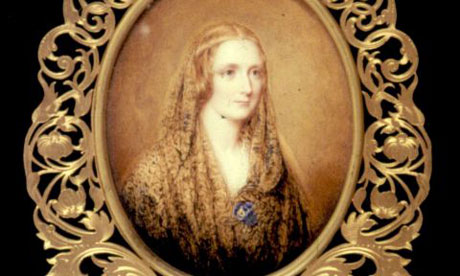




Follow Us!