Home » Archive by category "Uncategorized" (Page 153)

Book Review: The Language of Ghosts by Heather Fawcett

cover image for The Language of Ghosts by Heather Fawcett

The Language of Ghosts by Heather Fawcett ( Bookshop.org | Amazon.com )

Balzer + Bray, 2020

ISBN-13: 978-0062854544

Available: Hardcover, Kindle edition, audiobook, audio CD (pre-order)

Princess Noa Marchena and her sister Mite escape a deadly palace coup with their older brother, now king, Julian, a dark magician with command of all nine languages of magic.  Since dark magicians have been known to lose themselves to dark magic, Noa makes it her business to act as Julian’s conscience. Hidden away on a moving island protected by a sea serpent, Julian plans his return to his country and his throne.  Then he learns that Xavier, the leader of the coup, is killing all dark magicians in his kingdom and is seeking the lost languages of magic in order to find a magician who can use them to defeat Julian. The Marchenas discover one before Xavier; the language of ghosts, which Noa names Shiver. The language of ghosts allows someone who can use it to travel through the land of death, and to see and speak to ghosts. The ability to read and understand it is rare, but Noa, until then without magical abilities, discovers that she is able to understand it.

What with the suspenseful palace coup and dark magicians, at the beginning and a title like The Language of Ghosts, I expected a little more spookiness to the story. It’s been compared to Howl’s Moving Castle, and it does have a magically moving island and a crabby magician, but it doesn’t have the depth or humor of that book.  It is more likely to appeal to fans of Jessica Day George than it is to readers of Mary Downing Hahn. The Language of Ghosts is an okay middle-grade fantasy with a few genuinely suspenseful moments, enjoyable but not outstanding and certainly not as ghosty as I expected it to be.

Interview: Lizzy Walker Talks to Joe R. Lansdale

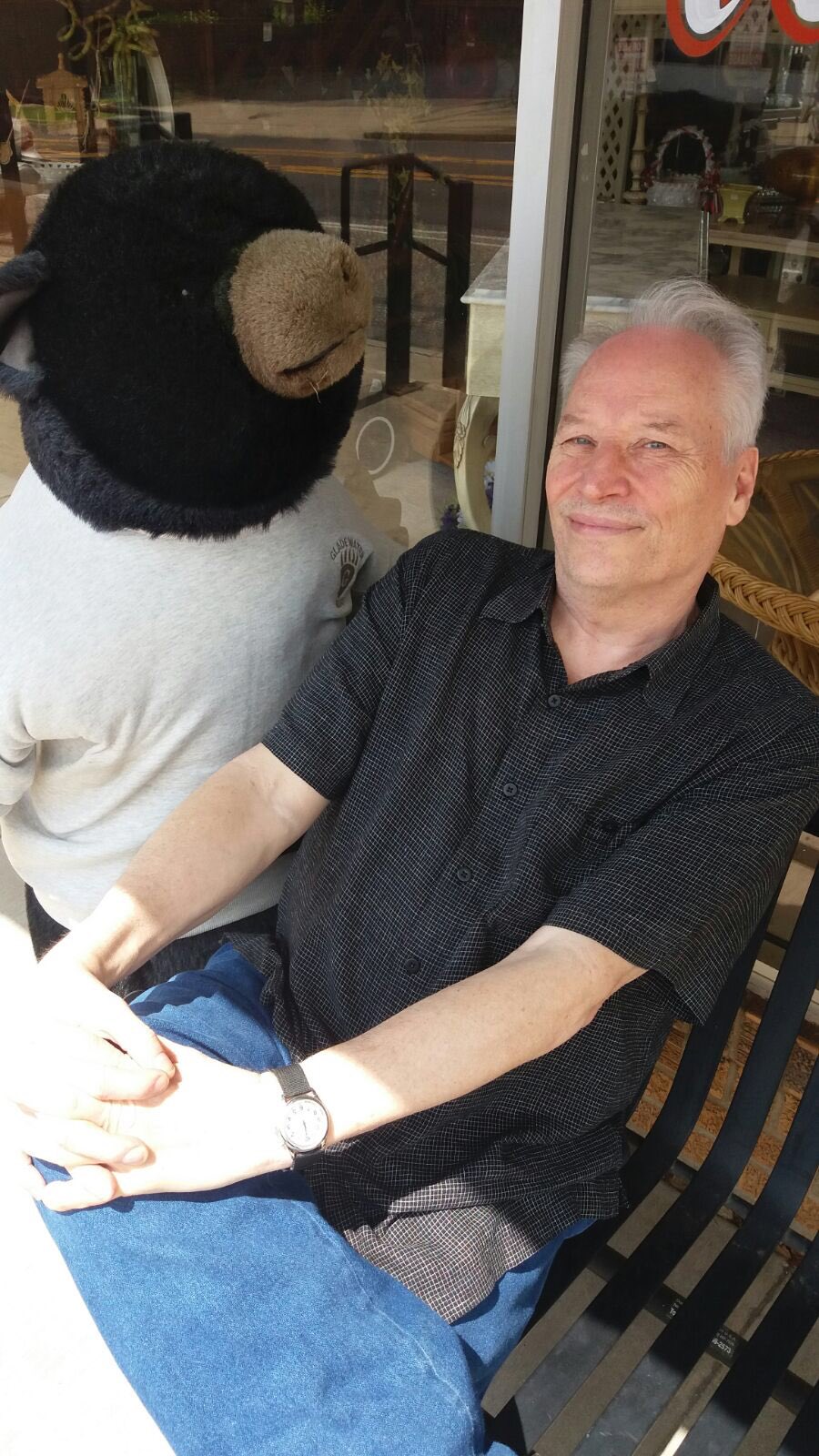
Photo of Joe R. Lansdale

Joe R. Lansdale

Joe R. Lansdale is an award-winning writer in multiple genres, including Western, horror, crime, suspense, mystery, science fiction, and comics. In addition to novellas, chapbooks, comic books, and short stories, he has written over 45 novels. Several of his books have been adapted to film. He is also the subject of Hansi Oppenheimer’s documentary All Hail the Popcorn King. Reviewer Lizzy Walker was lucky enough to have the opportunity to interview him for Monster Librarian.


LW: In the All Hail the Popcorn King documentary, you mentioned that your interest in reading started with discovering comic books. What titles did you start reading? What is/was your favourite book or series? 

JL: For me, it’s not that simple. When I was a child it was John Carter of Mars by Edgar Rice Burroughs, and that, as well as Tarzan and other books by him, were among my favorites, and he is still my sentimental favorite writer. I like a lot of series, but most of my favorite novels beyond Burroughs were Kipling’s The Jungle Book, as well as his short stories, which I adore, specifically,  “The Man Who Would be King”, anything by Jack London, Twain, and there were quite a few others. As I got older, I grew into liking Twain even better, started reading Richard Matheson, Charles Beaumont, Ray Bradbury, and just about any science fiction writer out there. I was especially fond of Philip Jose Farmer, but I read them all and liked them to varying degrees. Henry Kuttner, Cyril Cornbluth, and so on. Early teens it was To Kill a Mockingbird by Harper Lee, which still resonates with me and is probably my favorite novel. Late teens it was F. Scott Fitzgerald, John Steinbeck, William Faulkner, lots of books on anthropology, sociology, psychology, and an insane amount of history.  In my early twenties I discovered Raymond Chandler, Dashiell Hammett, James Cain, Ernest Hemingway, Flanner O’Conner, my favorite short story writer, though her novel Wise Blood is a favorite. Carson McCullers, Larry McMurtry, and so many more. I guess if I have to pick a series, however, I’ll go for Raymond Chandler and his Philp Marlowe novels.  Later, James Lee Burke’s series books, Robert B. Parker, Ralph Dennis, and well, this list is far from complete and could get very long.

Sorry. Got carried away. Favorite novel. To Kill a Mockingbird, Harper Lee.


LW: You also talk about the library. How did libraries shape your future in writing? 

JL: Bookmobiles were my first library. I would check out books during the summer, which is the only time I think it ran. There was another kid that had a card, but he didn’t like to read, so he would let me have his three books, and I would read them. I also read any book I could find. I was reading a lot of adult books before I was a teenager. We were poor and couldn’t afford much in the way of books, but my mother was always getting hold of used or discarded books, so I read those. She also managed me a library card in Gladewater, Texas, and later an actual library became my home. I went through the children’s stacks quickly, and the librarian was good about letting me read above my age level. I read books on birds, animals, travel, adventure, and certainly lots of novels. I read short stories, but my true love for them developed over time, and I have the library to thank for that. Later, the Tyler Junior College library became important to me, and finally the Nacogdoches, Texas library. I actually can afford to buy books these days, so though I donate to the library, I rarely use it anymore. My personal library is monstrous. I read three or four books a week, but I’ll never get through all of the books I own, and keep adding to.


LW: What are essential, comics or otherwise, you feel every reader should pick up? 

JL: As a kid, I read all kinds of comics. I think it has to be what appeals to you. For modern readers I’d recommend WATCHMEN and THE DARK KNIGHT RETURNS, but I love all the old archive DC comics. I read Marvel, but have always had a soft spot for DC comic characters. Comics are struggling these days. I also recommend a number of comics like Capote in Kansas, which is about the writing of IN COLD BLOOD, and there are a number of good biography comics, and even a great graphic novel of TO KILL A MOCKINGBIRD.

LW: What influences your writing?

JL: Everything. I mentioned a lot of the books that influenced me. But newspaper articles, current events, watching people, remembering stories my folks used to tell about the Great Depression, and stories they told that their parents told them about growing up in the eighteen hundreds. My father was born in nineteen-o-nine, my mother in nineteen fourteen, so they were on the cusp of the nineteenth century and the twentieth century in that things didn’t change automatically when the twentieth century rolled in. I was born in the middle of the twentieth century, during the Cold War, the sixties upheaval, the Vietnam War, Elvis and the Beatles, and all of that has gone into stories.


LW: Do you have a favourite genre or audience to write for? 

JL: No. Whatever interests me at the time. Maybe I lean a bit toward novels that are historical to some degree.


LW: Can you talk about how East Texas influences or enhances your writing? 

JL: It’s where I grew up. It’s what I know. My character was built by growing up running the creeks, rivers and woods.  The land, the climate, the people, the experiences of growing up in a racist society, rebelling against it, and the Vietnam War, and so on. It’s all interwoven.


LW: How would you categorize you work?

JL: The Lansdale Genre.


LW: Your discussion about how your mother and you would sit on the roof and watch the drive-in flicks was great. What is your fondest memory of this time with your mother? Favourite film?

JL: We actually sat at a window in a house with a row of tall windows and watched the drive-in. We couldn’t hear the sound. From then, I remember cartoons, and my mother made up stories to go with them. Warner Brothers cartoons are what I best remember. My favorite pure drive-in movie, meaning a movie that was pretty much designed for Drive-ins, was either Night of the Living Dead or Texas Chainsaw Massacre. I had other favorites that showed there, but they were often films that were actually designed for theaters. That was during my teen years.

LW: What was your introduction to horror?

JL: Film, and a collection of Edgar Allen Poe Stories my mother gave me. I was young for them, but my mother thought I was mature enough for them, so that was the intro.


LW: What advice do you have for new writers? 


JL: Read, read, read. Write, write, write. It’s best to write a little a day so as not to dread it. Mileage may vary on that method. But I like it. I generally only work about three hours a day.

LW: Can you talk about any upcoming projects? 

JL: My son has adapted my story the Projectionist into a screenplay, and I hope to direct it. We’ll see. I’m working on a new novel, but I don’t talk much about works in progress. I have a number of things coming out later this year. MORE BETTER DEALS from LITTLE BROWN/MULHOLLAND being the most prominent. It’s a crime novel. I think of it as Cain’s DOUBLE INDEMNITY meets Fitzgerald’s THE GREAT GATSBY.

LW: I know this is described in the documentary, but I have to ask. What is the best way to eat popcorn? 

JL: With your hands.

LW: I recently finished the Bubba Ho-Tep and the Cosmic Bloodsuckers. How much creative influence did you have on the series? 

JL: The writer who adapted it kept me in the loop, but the artist did his own thing. I usually got to make suggestions there as well, but was less involved with that.

LW: Do you have anything else you want to tell Monster Librarian readers about yourself or your work?

JL: Only this. Keep reading.
 

Book List: Black Authors of Speculative Fiction

This is not so much a book list as a list that will lead you to books.


I like to browse at the library (a pastime, unfortunately, that is on hold for the time being) and have discovered a lot of interesting authors that way. The new books section there is how I discovered Nnedi Okorafor, Rivers Solomon, and C.L. Polk. While I was encountering these authors for the first time, there was also a push for readers to deliberately work on including more diverse writers in their reading material.  Both then and now there’s an argument made that readers should just read what they want, without considering the race of the author.  It is valid to read just what you want to read, or to read the same kind of thing (or the same book) over and over– as Ranganathan says, every reader his book. But why not push your boundaries a little? If what you’re looking for is a good story, there are a lot of good stories you might miss out on if you aren’t deliberately seeking out Black authors. There is frequently a different aesthetic to their books, and the stories can catch you in ways you don’t expect. This difference leads to looking at speculative fiction genres through a new lens. In the case of Black people in the African diaspora, that aesthetic is generally referred to as Afrofuturism, a term first coined by Mark Dery. Nigerian writer Nnedi Okorafor recently differentiated that from the writing of Black Africans, which she identifies as Africanfuturism (you can read about that on her website, which I’ve linked to below, just scroll down to her name). Definitely, not everything Black writers come out with falls into this aesthetic. Considered althogether, Black speculative fiction covers a broad range of approaches to science fiction, fantasy, folkloric, and fluid fiction (a term coined by literary theorist Kinitra Brooks).  If you haven’t tried it,  look up some of these authors. I think you’ll find something you like.

I’m going to note that these are extremely brief and incomplete summaries, and it is a far from complete list. To learn more about these authors and their books click on the links. Enjoy!


Steven Barnes (Goodreads):  Barnes writes alternative history, science fiction. horror, nonfiction, sometimes with Tannarive Due or other co-authors.

Tannarive Due (author website) : Due writes horror and nonfiction, sometimes with Steven Barnes. Due is an academic who teaches and writes about Black speculative fiction, particularly horror.

Jewelle Gomez (author website) : Jewelle Gomez is best known as the author of The Gilda Stories, about a black lesbian vampire. She has written poetry, plays, and essays.

N.K. Jemisin (author website): N.K. Jemisin writes Afrofuturistic science fiction and fantasy. Jemisin won three consecutive Hugo awards for Best Novel for the books in her Broken Earth Trilogy.

Walter Mosely (author website): mysteries, science fiction, nonfiction.  Mosely is best known for his Easy Rawlins mystery series but has written in a variety of genres.

Samuel R. Delany (author website): science fiction, LGBTQ+ fiction, nonfiction. Delaney is the first Black person to be recognized as a modern science fiction writer.

Wrath James White (publisher website). interviews at Monster Librarian : extreme horror. Click on these links to see our reviews: Yaccub’s CurseSucculent PreyThe ResurrectionistSacrificeSloppy Seconds,and Vicious Romantic

Sumiko Saulson (author website): horror, graphic novels, nonfiction on black women in horror. In addition to writing fiction, Saulson is the compiler of 100 Black Women in Horror (click here to see our review)and editor of the anthology Black Magic Women: Terrifying Tales by Scary Sisters. 

Octavia Butler (official website of the Octavia Butler Estate): science fiction, alternative history, dystopian fiction Butler was the first recognized black woman author of modern science fiction and an inspiration for many Afrofuturist authors. See our review of her Earthseed Trilogy, which includes Parable of the Sower and Parable of the Talents here.

Tomi Adeyemi (author website) : YA Africanfuturist fantasy. Adeyemi is the bestselling author of the Legacy of Orisha series.

Evan Winter (Goodreads)interview at Tor.com: Africanfuturist epic fantasy.

Nnedi Okorafor (author website), Goodreads: Okorafor is an award-winning Nigerian-American science fiction and fantasy author who defines herself as an Africanfuturist and Africanjujuist (visit her author website for her explanation)

P. Djeli Clark (author website): Clark is an academic who writes nonfiction on Black speculative fiction, as well as a writer of Black speculative fiction, including alternative history, science fiction, and fantasy.

Victor LaValle (author website): Lavalle teaches at Columbia University. He writes horror, science fiction, and fantasy. Lavalle has won the Bram Stoker Award for his novella The Ballad of Black Tom (for our review click here) and the graphic novel Victor Lavalle’s Destroyer (for our review, click here).

Nalo Hopkinson (author website): Born in Jamaica, Nalo Hopkinson describes herself as a writer of fantastical fiction. She’s written nine books, including the award-winning Brown Girl in the Ring. She’s a professor of creative writing at the Univeristy of California Riverside.

Alaya Dawn Johnson (author website): is the author of YA and adult urban fantasy and speculative fiction, including the Andre Norton award-winning Love Is the Drug at the Nebula Awards.

C.L. Polk (author website): C.L. Polk is the author of the Kingston Cycle, a fantasy which takes p;ace in a steampunk-like setting similar to Edwardian England. The first book, Witchmark, won the World Fantasy Award and was nominated for the Lambda, Nebula, Locus, and Aurora awards.

Daniel Jose Older (author website) : Daniel Jose Older’s writing includes historical fantasy for middle-graders, the award winning YA Shadowshaper series, and adult urban fantasy .

C.T. Rwizi: C.T. Rwizi is originally from Zimbabwe and Swaziland, lived in Costa Rica and the United States, and now resides in South Africa. His debut fantasy novel, Scarlet Odyssey, was just released. Read our review here.

L.L. McKinney (author website): McKinney is the author of the YA Nightmare-verse dark fantasy books, beginning with A Blade So Black.

Rivers Solomon (author website): Solomon’s first book, An Unkindness of Ghosts, was a finalist for the Lambda, Tiptree, Locus, and Hurston/Wright awards and won a Firecracker Award. Their novella, The Deep, a collaboration with the musical group Clipping (which includes Daveed Diggs, formerly of Hamilton) is an outstanding work of Black speculative fiction. Read our review here.

Valjeanne Jeffers (Goodreads), (author website): Jeffers is the author of the Immortals series. She has published fantasy, science fiction, and erotica, particularly in Afrofuturist subgenres such as steamfunk and cyberfunk

Justina Ireland (author website): Ireland is the author of the YA alternate history horror novel Dread Nation and its sequel, Deathless Divide. She has also written other YA fantasy novels and writes for the Star Wars franchise.

Nicky Drayden (author website): Drayden writes Afrofuturist science fiction and fantasy.

Andrea Hairston (author website):  Hairston is a playwright, novelist, and professor of theatre and Africana at Smith College. She is a feminist science fiction writer who has published novels, plays, and essays. Her book Redwood and Wildfire won the Tiptree and Carl Brandon Society awards.

Rebecca Roanhorse (author website): Roanhorse is an award-winning speculative fiction writer who has both Ohkay Owingeh Pueblo and African-American heritage. She has written post-apocalyptic urban fantasy and middle-grade fantasy, and writes for the Star Wars franchise.