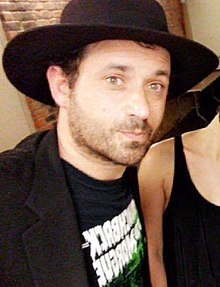
Josh Malerman’s debut novel, Bird Box, recieved a nomination for the Bram Stoker Award and has been made into a movie starring Sandra Bullock. Since it came out, he has published multiple novels, including Black Mad Wheel, Unbury Carol, and Goblin, as well as short stories. Malerman is also a singer/songwriter for the band The High Strung. Malerman’s most recent book is Malorie, a sequel to Bird Box, released just last month. Reviewer David Simms had an opportunity to talk with Malerman about writing, music, ducks, and Malorie.
DS: For those of our audience who aren’t familiar with you, can you share a little about yourself?
JM: Sure. I’m from Michigan, went to Michigan State University, where my grades suffered because I tried my hand at a first novel. Made it 300 pages but didn’t know how to end it. I moved to NYC straight out of college, lived with my best friends/my band in Brooklyn. From there, The High Strung took to the road for 6, 7 years, playing to an average of 20 people, and loving every second of it. Along the way I finally finished writing a first novel and now I’m working on book 33. I live with my soulmate, the brilliant Allison Laakko, in Michigan. A ton of animals walk inside and outside this house.
DS: You said last year at a conference that you had up to 28 different novels in various stages of completion. Which of your unpublished novels are you most excited about– and why?
JM: This is hard to say, as I’m sure you know. But Unbury Carol has an extremely special place in my heart. She’s probably the most colorful of the lot? I don’t know. Maybe Goblin or Carpenter’s Farm are. But, colorful isn’t the only measure, of course. Bird Box and Malorie are supposed to be straight shots, almost black and white films, episodes of a freaky TV show. So I love them for what they are, too. But with Carol I felt completely free of any “device,” if that makes sense. Not that device is always bad! Ha, told you this would be hard. But again, Carol was written at a clip of 5,300 words a day. I sailed through that book, the first draft, electrified. And for me, it’s always spirit over vocabulary, juice over talent. I love Smoke in that book. And so, if pressed, Unbury Carol seems to rise to the top. That said, Carpenter’s Farm is probably the closest I’ve come to expressing exactly what I meant to say.
DS: Many readers aren’t aware of your band, The High Strung, although they should be. The High Strung is a talented beast of a group that’s even penned the theme song from the hit show Shameless. Can you see any future connections between fiction and music?
JM: Well, I’d love to see a day where The High Strung do the music for a movie based on one of my books. That’s the ultimate fantasy right there, right? These are my best friends, we’ve known each other since we were 11. We toured America some 30 times. Just, a whole life together. One interesting idea is the band doing a soundtrack for one of the books. Why not, right? Chris Campbell did one for Carpenter’s Farm and I can see an angle on that now. So, yes, I’m looking for that connection always.
DS: What’s your biggest musical influence(s)? How do you approach songwriting differently from storytelling?
JM: My favs used to be The Who, The Kinks, The Zombies. But then it became Guided By Voices, The Minutemen, more. And these days who knows? I listen to tons of horror movie soundtracks. But I listen to Rush and metal, too. It’s a little easier for me to write to music with no lyrics, but I wanna change that. And it used to be that a small idea became a song and a bigger idea a novel. I’d written a dozen novels before writing a short story. Which is weird to me now! Because that all changed, too.
DS: Have you everconsidered writing a concept album? Companion to a novel? Soundtrack– since you often write to them?
JM: Yes! I’ve absolutely considered writing a concept album. I started one called We Are Not Alone which opens, song one, in a Texas bar, the front door swinging open, a Japanese astronaut limping in, asking to use the phone. He finally gets to the pay phone along the wall and all the Texans hear it as he says, “We are not alone!” And I imagine I will one day write a soundtrack to a book of mine, but right now I’d rather ask someone else to do that. Just to make it a team game.
DS: You wrote Carpenter’s Farm, a serial novel that you gave away to readers during one of the darkest periods of our lives, on the fly. What brought this about– can you explain the inspiration for the story and for the free serial?
JM: If anything drives me nuts, it’s an unfinished novel. I’d tried my hand at Carpenter’s Farm around four years ago. I made it 40,000 words and realized I was just coming at it from the straightest, lamest angle. So, for years now, that’s kinda haunted me. Then, in February of this year, it struck, out of nowhere really, how it should go. I was just in the driveway and it hit me and I called my manager, all that. My plan was to write it in April. Then, the pandemic came in March. Way I saw it then was, well you planned on writing it in April, you have to be home in April anyway, let’s just stick to the plan. Then I got a call from my webmaster, asking if I had a new short story to put up on the site for free. The same one had been on there for years. I told him I didn’t have one. He asked if I wanted to write one. I thought about it and said, No, I just wanna write Carpenter’s Farm. And it hit me, I suppose; I asked what he thought of me posting an entire novel, serializing it for free? He was way into it, had a million great ideas. I got the okay from Del Rey, from my team, and I was off. Way I saw it was, two major things would get accomplished: First, I’d almost be forcing myself to write a book that had been haunting me for years (my first published short story was “A Fiddlehead Party on Carpenter’s Farm” in 2015), I’d write it entirely new, fresh angle and characters, and I’d do it live. And second, people who were strapped for cash would get a free novel, in full, but serialized, giving them something other than TV to look forward to weekly. Once I put out the bat signal, asking if other artists wanted to play along (make music for it, write poems, illustrations), that’s when it really took off. Suddenly I felt like we were all in a band, during a very dark time, delivering something exciting to other people going through the same thing. The experience was unreal. Here we were, totally edged out, anxious, scared, yet waking each day propelled to work on this. It was glorious in its way.
DS: When I saw on Facebook that you offered to help people in need, some of whom you didn’t have a connection with– you did so just because. It was a special thing to hear about. What was that like? I remember you speaking about your roots and I think I can speak for everyone that we were blown away. Is there a cause right now you hope your readers will support?
JM: Man, I wish I had a billion dollars so I could just help in every conceivable way. I think one of the best things we can do is understand that when someone needs help, any help goes a long way. Man, I was so broke for so long. One year I made 2 grand. The whole year. I remember playing a game of pool for 20 bucks and I had a clean shot on the 8 and I miffed it. This was at 2AM. And I walked home, broke, thinking how dumb I was to risk my last 20, trying to double it. My friends would throw parties and I’d collect the cans the next morning. This went on for years. So, 20 bucks was huge back then. Enormous! I think sometimes we see a word like “donate” and our minds go to a huge number, because we hear of celebrities and business owners donating millions. But, again, 20 bucks was the difference of knowing I was set for the next day or not. So, I would say, start there. Rethink “charity.” It’s all relative. And if you can spark a little hope or relief in someone else, that could end up catching. That could snowball into momentum for them, real momentum that changes their life.
DS: You’re known for passionate, intricately live stage performances of scenes from your novels. Has the pandemic changed how you do book events? How? Once the world heads back to sanity (hopefully soon), have you thought about a full-scale production of a novel, screenplay, puppet show?
JM: So, we had the best plan in the world for Malorie. There’s a train that circles the Detroit Zoo and we rented it out. Attendees would ride the train blindfolded as we narrated the scenes over the train’s PA speakers. There was going to be stops where scenes were acted out, where songs were played. And, of course, a full bar was waiting at the end. I mean, this was gold. We’re planning on doing it as soon as we can, as soon as it’s safe. But, you know, it’s a stinger, not being able to. Inspection was done in the cathedral of the Masonic Temple, Unbury Carol in an amazing live music venue. My ultimate fantasy is to buy a theater. I wanna bring Grand Guignol to this area. Horror theater. Short plays, starring locals, my friends playing the music, maybe I write and direct a handful. Maybe a used horror bookstore in the front lobby.
DS: MALORIE. If there is a perfect novel for this pandemic, it’s right here. I’ve noticed plenty of parallels between how characters behave in the story and how those in our country are acting. Specifically, I can draw comparisons to people such as Olympia, Tom, Malorie, and Gary, not to mention the two groups. Without giving away much, do you have any thoughts on this? Did current events affect your writing and character development? Characters that might be anti-maskers/blindfolders, etc? What kind of sociological or psychological connections. did you make? It’s a great analysis of the “me first” vs. “let’s help the world” mentality we’re facing today.
JM: So, the book was written last year! But holy cow if the mask/blindfold debate isn’t pertinent. Malorie herself is obviously staunchly pro-blindfold. And see, that’s the big difference between Malorie and what we’re facing here: there is a viable argument against Malorie’s philosophy but none against wearing a mask in the real world. Tom isn’t crazy for wanting progress. In theory, trying to “solve the creatures” is a noble pursuit. But in our worlds? Fuck no. So, while Malorie could be the poster mother for these insane times we live in, Tom makes sense in his own world, too. A bigger connection that I’ve seen between the book and reality is that we don’t know when this thing will end. To me, Malorie isn’t end-times. The creatures are something to be endured. They arrived out of nowhere and can vanish just the same. But it’s the not-knowing-when that is grueling. I wanna state on the record that I know we’ll get through this insanity. Ultimately, we’re too smart not to. But holy shit, a plan would be nice.
DS: Do you believe you’ll ever return to the Bird Box world in the future? What about returns to other creations?
JM: Been thinking a lot about Goblin 2 lately. It just makes sense. Another six stories in that town. Why not? Sounds so fun to return there! I also like the idea of a whole book dedicated to Smoke from Unbury Carol. Not sure what that would look like, but I believe the Trail is a big enough world to return to. As goes the Bird Box world? I don’t know. I like the idea of a third book in which everyone thinks the creatures are gone. You open at a diner, everyone eating, eyes open. Maybe an old man passes the front glass, blindfolded. That kook! But we, as readers, we know something has to happen here, right? No way there’s a whole book with nothing. So every time a character looks at something, we’ll be edged out. Someone walks in the door, Sally looks… oh no! Nope, just Bill entering the diner. Phew. But I don’t know. It would take a leviathan idea for me to return to that world. Though, I gotta say, I love writing about Malorie. She’s home for me.
DS: What works do you have upcoming that you are excited about?
JM: I’m thrilled with the book I’m working on right now. Forever Since Breakfast. And the band is working on two albums. Southfield and Of a Piece. Also, A House at the Bottom of a Lake comes out in a big way later this year, through Del Rey. And I’m talking to people about directing a feature. All outrageously exciting.
DS: We’ve all found coping mechanisms during the pandemic. How are you surviving? Any odd activities or fun things to do that are just a bit different? I’ve noticed the ducks, for one.
JM: Haha. Yes, raising ducks suddenly has been nice. Also, we have a pool, right? And a few people come over regularly, like once a week. Like my brother and his son on Saturdays, etc. Those visits, from others, are making all the difference in the world. Makes us feel more connected. And there’s more than enough space out there to safely distance. But, really, reading and writing is getting me through it. Allison has taken on a gazillion projects, home improvement stuff, and I can tell that’s doing for her what writing does for me.
DS: Is there anything else you’d like to add for librarians and readers about MALORIE or any other topic I’ve missed?
JM: Well, I want to say thank you, to you. You said some really nice things in this interview and I’m eternally grateful for this. I only wish we could do this over a table in a bar. Soon, though. Soon. First six rounds on me.
DS: Thank you again for this. When I see you next, drinks are on me. Hopefully, music will be involved!





Follow Us!