Home » Archive by category "Uncategorized" (Page 142)

Book Review: The Witching Stone by Danny Weston

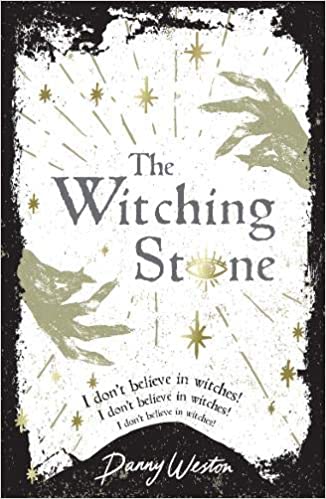
cover art for The Witching Stone by Danny Weston   

The Witching Stone by Danny Weston ( Amazon.com )

uclanpublishing, 2020

ISBN-13: 13579108642

Available: Paperback


The Witching Stone by Danny Weston is an enjoyable read for young readers who appreciate coming-of-age stories with a touch of mystery and horror. Danny Weston is the pseudonym for Phillip Caveney, who has written many thrillers for adults, children and teenagers, some of which have won prizes.

Teenager Alfie Travers has just been dumped by his longtime girlfriend. Alfie agrees to accompany his father on a job in a small English village, but is prepared to be bored out of his gourd. Killing time in the church graveyard, he sees a large stone marking the grave of the alleged witch Meg Shelton, who died in 1705. Mia, a goth teen, challenges him to summon the witch by walking counterclockwise around the stone three times, while intoning “I don’t believe in witches!”

Of course, Meg apparates before Alfie. She claims she’s not a witch and that her infant son was taken from her. Meg threatens to kill everyone Alfie loves if he doesn’t find the grave of her son.

Alfie and Mia search for clues. Meg, impatient for progress, shows her anger by turning the village’s milk sour, putting toads in muesli, and blowing up computers. Alfie and Mia’s search takes them to library archives, the ruins of Meg’s cottage and a viscount’s estate with an impenetrable maze of yews. Was Meg a witch? How did she die? What happened to her son?

The plot is straightforward and easy to follow. The narrative is simple and direct. There are only a few punctuation errors. Recommended for ages 10-14.

Contains: discussion of teenage pregnancy


Reviewed by Robert D. Yee

Book Review: Temporary Planets for Transitory Days: Poems of Mykol Ranglen by Albert Wendland

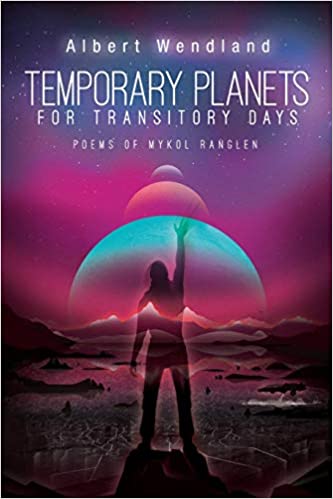
cover art for Temporary Planets for Transitory Days: Poems of Mykol Ranglund

(  Bookshop.org  |  Amazon.com  )

Temporary Planets for Transitory Days: Poems of Mykol Ranglen by Albert Wendland

Dog Star Books, 2020

ISBN: 978-1-947879-18-8

Available: Paperback, Kindle


Mykol Ranglen, adventurer, talented finder of rare Clips left behind by the Airafanes, keeper of secrets, and central character of Albert Wendland’s science fiction books The Man Who Loved Alien Landscapes (2014) and In a Suspect Universe (2018) has always been a poet. In the first book, he describes one alien landscape as “dazzle” running through “the dew-laced savanna” with “scents of basil and almond” as the grass makes “soft cracking sounds like static electricity.” In the second book, apocalyptic visions from his poems become real and threaten the safety of the woman he loves. So, it is no surprise that Wendland was inspired to write a third book, a collection of speculative poetry, supposedly written by this enigmatic character.

Temporary Planets for Transitory Days is a more concise version of ideas introduced in the novels. In all three books, Wendland looks at what might happen in futuristic human/alien worlds that continue to be influenced by past civilizations and mythologies. He imagines these worlds as places which have devolved. They are inadequate for living and never change because they are controlled by technology and lacking in what we might recognize as a humanizing touch. Creatives like Ranglen and his lover Mileen, a painter, are living in worlds that the reader can still recognize as having links to our times with “aircars” for speedy transportation, competitive people using “card-links” to make business contacts, and gangsters who traffic “the deprived and homeless.” At the same time, these new worlds are nightmarish developments of what might have once seemed like exciting possibilities such as teleportation (but with time glitches, so at what point is Ranglen in his relationship with Mileen in a certain place?) or the projection of the imagination into harmful and even deadly objects or scenarios that cannot be controlled (was someone killed by a unique type of aircar that only existed in a poem Ranglen wrote?).

The poems are divided into groups and include some that directly reference characters and events in the books, some that might be about the author’s actual life, and others that seem inspired by Wendland’s own reading and teaching as a professor of literature. There are even poems involving superheroes, Native American mythology, and vampires. Overall, Wendland and Ranglen seem to be attracted to writing about their eclectic, science-fiction infused personal interests as well as sudden, intense encounters and events that are best captured as poetic memories. In addition, the poems even predict Ranglen’s future because Wendland notes that these poems will lead to two more Ranglen novels “yet to be written.”

In the poem “Notes Toward a Supreme Science Fiction,” we learn what Wendland values most in writing science fiction: “The obsessed, the pursued, / And the space / In between.” He sees, as he says in “Negotiating a Dream” an opportunity when we might be able to “Maybe even appropriate/ Some other era’s / Lost stellar dreams.” In contrast, the love poems in the Planetary Love section of the book are more immediate, focusing on what loving someone means and how that love is an action and unifying force rather than being an exploration of complicated emotions. Ranglen talks about that “singular moment” when the “world of another person is open” (“In a Moment”) and about loving in a “language” “that came before words” (“The Touch”). The poem that defines Ranglen best has the same title as the first novel and appears toward the end of the collection. However, there is also an excellent introduction to the poetry that helps the reader for whom Ranglen is a stranger to understand, in broad strokes, the context of the poems as a whole.

If you want to experience a pleasant feeling of recognition, like a memory, read the novels first. If you decide to read the poems first, it would be worthwhile to avoid dipping into the book randomly so that the poems will unfold in a logical way, thus providing enjoyment and understanding through a narrative approach as spare and direct as the prose of the novels.  Recommended.


Reviewed by Nova Hadley

Book Review: The Willows by Algernon Blackwood

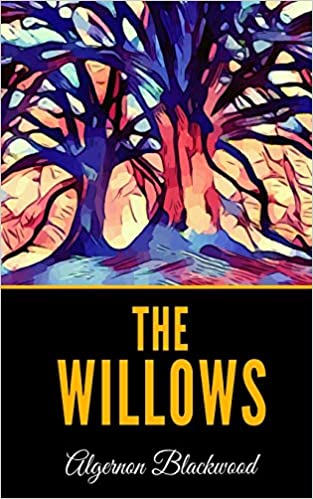
cover art for The Willows by Algernon Blackwood

Bookshop.org  |  Project GutenbergAmazon.com )

The Willows by Algernon Blackwood

ISBN-13 : 978-1081920890

Available: Hardcover, paperback, Kindle edition, audiobook, Project Gutenberg


Having just finished T. Kingfisher’s book The Hollow Places, I discovered in the afterword that she had been inspired by a novella by Algernon Blackwood titled The Willows, which was much admired by H.P. Lovecraft as an example of horror and weird fiction. The story follows the narrator and his traveling companion (referred to throughout as “the Swede”) as they journey down the Danube River, which is almost a character in the story. Having left the town of Pressburg during a rising tide, with the threat of a storm on the way, they are washed out of the main channel of the river and into a wilderness of islands, sandbanks, and swamp covered with willow bushes, a “separate little kingdom of wonder and magic… with everywhere unwritten warnings to trespassers.”

With the waters still rising and the winds blowing the two find an island large enough to camp on that they are sure they will not be washed away. The rising water, the shouting wind, the crumbling islands, and the masses of willows all together create a sense of unease and terror in the narrator, which he tries to dismiss by focusing on practical matters. He and his companion avoid speaking about their current situation, even when all they have to occupy themselves with is conversation. Alone, collecting driftwood for the fire, the narrator describes the willows as “utterly alien,” a vast army of “innumberable silver spears”. Although he suspects his companion shares his feelings of disquiet, the two men don’t speak about their unease. After their first night on the island, the narrator sees that the islands, covered in willows, have moved closer to their own, which is washing away. His companion has discovered that they cannot leave right away, though, because one of their steering paddles is missing, the second has been filed so it will break on usage, and there is now a hole in the bottom of their canoe, and believes the damage was done to make them victims of a sacrifice. The narrator, not wanting corroboration for his feelings of unease and fear, attempts to come up with logical explanations, but neither of the two can really believe them. Both men are terrified of their upcoming fate, but his companion advises him that it’s best to neither talk nor think of the willows who may be searching them out and hope that, in their insignificance, the creatures of the “beyond region” they have strayed into, will fail to find them.

A camping trip with a friend doesn’t sound like it would be ominous and terrifying, but Blackwood’s vivid descriptions of the natural world and the narrator’s disintegrating state of mind turns what seems at first like a river inlet filled with willow bushes that might be a good place to stay overnight, into an unnatural, dread-inducing enviroment. It’s creepy in the “I can’t believe these characters slept at all on the island” kind of way. You will never look at willows without seeing them as sinister again.

Blackwood’s descriptions of the willows as an “unearthly region” where the beings “have nothing to do with mankind” marks this story as an early work of weird fiction, and you can clearly see the influence on Lovecraft’s work. It’s easy to see why Blackwood is considered a master of the genre. Highly recommended.

Note: I read the Project Gutenberg edition of this novella, not the one pictured above.