Home » Archive by category "Uncategorized" (Page 122)

Book Review: The Devil and the Dark Water by Stuart Turton

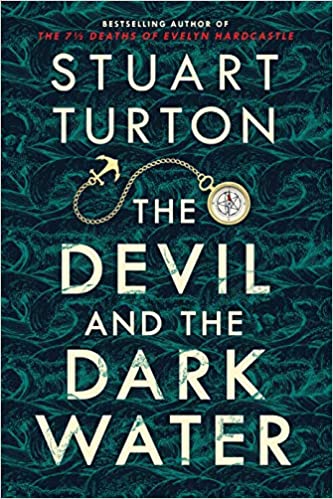
cover art for The Devil and the Dark Water by Stuart Turton

(  Bookshop.org )

The Devil and the Dark Water by Stuart Turton

Sourcebooks, 2020

ISBN-13 : 978-1728206028

Available: Hardcover, paperback


Stuart Turton probably wouldn’t describe his books as horror, but they are compelling, original, and dread-inducing. In a departure from the surreal Agatha Christie-like The 7 1/2 Lives of Evelyn Hardcastle, in The Devil and the Dark Sea, this story takes place in 1634, on a ship leaving from Batavia (now Jakarta, Indonesia), the center of the Dutch East Indian Trading Company, for Amsterdam, home of the company’s headquarters, a journey of about eight months during which many ships were lost as sea. Readers expecting accurate historical fiction will not find it here: in a note, Turton essentially says he did the research, but threw it out the window if he found it wouldn’t work with his story. By changing as much as he did, he’s basically written an alternate history, which would be fine except that he never identifies it as such, which is unfair to readers unfamiliar with the setting, who will think it’s solidly grounded in the historical period (I guess once someone calls your work genre-bending it’s hard to commit).


Passengers on the Saardam include Jan Haan, the ambitious governor general of Batavia; his wife, Sara Wessell; and their inventive daughter, Lia; his mistress, Creesjie Jens, and her sons; his chamberlain, Cornelius Vos; and guard captain Jacobi Drecht.  Also traveling on the ship is Sammy Pipps, a Sherlock-type detective and alchemist of unknown origin who has been accused of spying, and his bodyguard/case recorder, former Lieutenant Arent Hayes. Before the ship leaves, a leper warns the passengers not to leave, warning that the devil “Old Tom” will be their downfall, but the governor general is insistent on leaving for Amsterdam immediately. Complicating things by bringing religion into the mix on a ship where passengers and crew are already uneasy and superstitious, a predikant, or preacher, and his acolyte Isabel, stow away on the ship as well.


Just as the ship sets off, the sail is unfurled to show a symbol that Creesje, the predikant, Arent, and one of the sailors individually recognize and associate with Old Tom. Is the devil really on the ship with the passengers and sailors, are they imagining things, or is someone playing with the characters’ fears in hopes of personal gain? The predikant, a former witch hunter, claims they’ll know for sure once three unholy miracles have occurred. As the ship gets further out onto the open ocean, the unholy miracles are identified, and the weather worsens, the onboard situation gets more violent and treacherous, and it becomes clear that, real or not, Old Tom has followers among the crew. As the histories of the characters and plot twists are unraveled, and the deaths stack up, the situation becomes even more unnerving. Is the ship haunted by Old Tom, or is something else going on?


Turton does a fantastic job of creating a sense of mystery and dread. There is no escape from the ship out on the ocean, just people, most of whom don’t like or trust each other, adrift after a storm. Turton admits he took liberties with history for the purpose of the story, so I don’t know if sailors truly lived continually in such brutal, violent environments, but he paints a vivid picture of the dynamics. Characters who could have been one-dimensional were fully developed: Arent turns out to be the governor general’s nephew, and while Haan might have been terrible to his wife and underlings,  he clearly cherishes his relationship with Arent. Haan’s wife Sara could have been set up in opposition to his mistress, but they turn out to be close friends. Sammy and Arent, for all their similarities to Holmes and Watson, are completely different in body type, personality, background, and overarching motivation. I found the very ending unneccessarily brutal, unrealistic and extremely disappointing, and felt it marred the story in a big way,  but I felt the atmosphere, character development, and descriptive language still made this worth reading.


The Devil in the Dark Water reveals some very dark aspects of overseas trade and the participants in it during the 1600s. No one comes away untainted. Despite the faulty ending, it’s a tale I won’t soon forget, and I would certainly give Turton another chance.

Contains: violence, gore, murder, implied rape, brutal killing of animals, body horror, mass murder


Reviewed by Kirsten Kowalewski



Book Review: Stranger Danger (Stranger, #3) by Michaelbrent Collings

cover art for Stranger Danger by Michaelbrent Collings

( Amazon.com  )

Stranger Danger by Michaelbrent Collings

Written Insomnia Press, 2020

ISBN: 979-8575116776

Availability: paperback, Kindle


Then Jesus asked him, “What is your name?”

“My name is Legion,” he replied, “for we are many.”


Stranger Danger is the third volume in the series featuring Legion, a teacher of justice and pain.  Like the unfortunate of the Biblical parable, Legion may have demons inside him and be quite crazy, in a figurative and literal sense.  But that doesn’t stop him from teaching people the error of their ways, in a bone-cracking, skin-pulping fashion.  If you’ve read the other two volumes (Stranger and Stranger Still) then you can’t miss this one, it’s the best one yet.  If you haven’t, this is still a great read.  Minus a couple small issues, it can still be read and understood as a stand-alone.  It’s every bit as good as Stranger Still (reviewed here ) but with the few minor tweaks made, this one is a notch above its predecessor.


As in the prior volumes, Stranger Danger runs two concurrent threads that start off separate, but eventually twine together.  Legion, a man with the ghosts of his brothers (Fire and Water) always with him and talking to him, stars in the first one.  He simply goes (or is led) to a place with a lot of wrongdoing, investigates the source of problems, and rectifies the wrongs inflicted on innocents, in an agonizing fashion.  This time, the site of mayhem is Tree City, a standard city with a ghetto overrun by four separate street gangs.  Legion’s story thread soon intersects with that of Candela Garcia, a cop who has been on the run from a psychopath for years, and has finally settled in Tree City, determined to make a better life for her son Chase, and the people of the city.  Her son makes the mistake of falling in with Wolf, the leader of one of the gangs.  Candela has to deal with the double trouble of helping her son and stopping the gangs from decimating the city.  Fortunately for her, Legion believes in stopping evil also, and the two of them use their opposing methods and beliefs to bring justice to the city.


Stranger Danger has the usual hallmarks of Collings’s writing in this series: extremely fast pace, excitement, and a mild touch of gore.  It’s the small touches that push this book above the previous one.  Fire and Water, the ghostly spirits in Legion’s head, are much better developed. Their advice does play a critical role in assisting Legion, but their constant verbal squabbling with each other also provides some occasional light-hearted moments.  The contrast between the two main characters also helps.  Candela is a straight-arrow, by-the-book cop who despises corruption and can’t be bought.  Legion understands right and wrong, but has no concept of laws when it comes to applying punishment.  Where Candela would make an arrest, Legion would break bones and crush pelvises.  It adds a nice dynamic to the story.


The character of Legion has also evolved.  Before, he was emotionless.  Now, at times, he actually experiences fear and (gasp!) happiness of a sort.  He isn’t flawless in his retribution either: one could make the case that a couple of the people Legion injures didn’t deserve it– they were just flunkies doing their legal jobs.  It’s different then the usual “good” or “evil” dynamic usually found in the series.  At the same time, Legion starts to question whether he should only punish the sinners, or maybe try helping out good people who don’t need correcting.   It all adds up to a more complex and interesting character.


Stranger Still is the best entry yet in a series that appears to have a ways to go.  Now, it’s just a matter of counting the days until the next one is released.  Recommended.


Contains:  violence, profanity, gore


Reviewed by Murray Samuelson

Women in Horror Month: Book Review: The Lady from the Black Lagoon: Hollywood Monsters and the Lost Legacy of Milicent Patrick by Mallory O’Meara

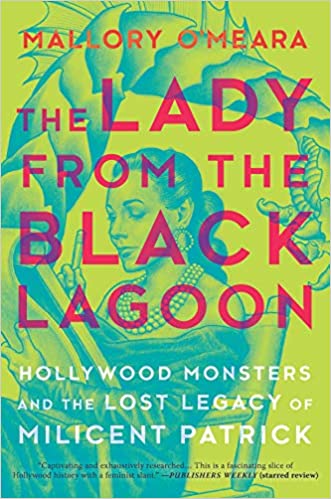
cover art for The Lady from the Black Lagoon by Mallory o"Meara

(  Bookshop.org  |  Amazon.com  )

The Lady from the Black Lagoon: Hollywood Monsters and the Lost Legacy of Milicent Patrick by Mallory O’Meara

Hanover Square Press, 2019

ISBN-13: 9781335937803

Available: Hardcover, paperback. Kindle, Audible audiobook


When Mallory O’Meara discovered that one of her favorite movies, The Creature from the Black Lagoon, featured a monster designed by a woman, Milicent Patrick, she knew she had to find out more. Sadly, there was little information available about this elusive figure. Through her research, O’Meara learned much about Patrick’s contribution to The Creature from the Black Lagoon and her eventual disappearance from film history. O’Meara, herself working in the horror movie industry, “set out to right the wrong and in the process discovered the full, fascinating story of an ambitious, artistic woman ahead of her time.”

O’Meara’s book is well-researched, using primary archival resources and interviews as a basis for her work. She describes pushback she received from different parties in her introduction. Similar to asking the question, “why is there a Women in Horror Month?”, she was asked why she was searching so much for a woman who was denied her craft for decades. O’Meara spends the bulk of the book answering this question.

The book isn’t strictly a biography of Milicent, but also of those closest to her. O’Meara includes biographical information on Milicent’s parents, William Randolph Hearst, Bud Westmore, and other people who had been influential in Patrick’s life. Interspersed in the chapters are the author’s discussion of her discoveries and “aha moments”, such as finding Hearst Castle as a clue to unveiling more of Milicent’s life, her time at Glendale Junior College, her eventual dropping out to attend Chouinard Art Institute, and Walt Disney hiring her on in the animation department of his humble studio. Milicent worked as an uncredited model, developing her own sense of style, something her father disapproved of. The author does not hide that some of Milicent’s life choices led to heartache and agony, her own as well as others. O’Meara discusses Milicent crossing paths with the infamous Bud Westmore and her time designing the Gillman, Universal’s monster in Creature from the Black Lagoon. The author also provides some great information on the history of special effects, and the ongoing gender inequality in the film industry.

A major criticism I have about the content is O’Meara’s exaggerated lack of understanding of the research process. She discusses her struggles with the process and, thankfully, credits those who helped her by providing her with clues or pointing her in the right direction. She seemed to be unaware of databases, or how to conduct oneself in an archival room. While such things are undoubtedly unknown to some people, including her own ignorance and gasping, and telling the reader she probably annoyed others in the research room of the archives, would probably be best left out. However, O’Meara’s conversational style of writing is appealing, to a point, and makes the pace of the book go quickly. Recommended.


Reviewed by Lizzy Walker