Home » Archive by category "Uncategorized" (Page 100)

Vault Review: Crank by Ellen Hopkins (#1 Crank, #2 Glass, #3 Fallout)

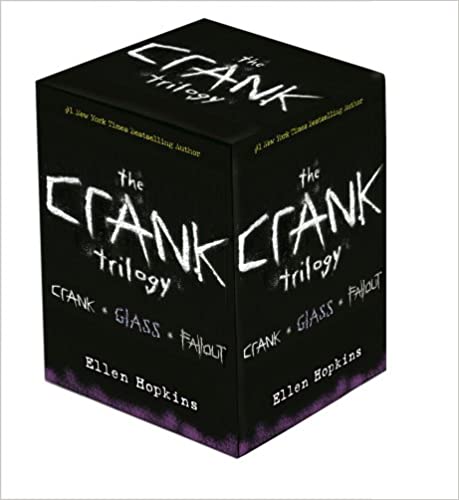
Boxed set of the Crank Trilogy by Ellen Hopkins  The Crank Trilogy by Ellen Hopkins (  Bookshop.org | Amazon.com )


We are revisiting our reviews of the Crank trilogy today, due to a recent challenge to Crank in my own school district (you never REALLY think it will happen in your area until it does).  Yesterday we published an interview of Ellen Hopkins from our vault, which I hope you’ll read. Today, we present our reviews of The Crank Trilogy, consisting of Crank, Glass, and Fallout. 
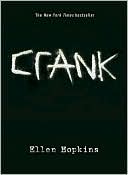
 

Crank by Ellen Hopkins

Margaret K. McElderry Books, 2010 (Reprint edition)

ISBN-13 ‏ : ‎ 978-1416995135

Available: Hardcover, Kindle edition, audiobook. ( Bookshop.orgAmazon.com )


Crank is Ellen Hopkins’ controversial, and sorely needed, verse novel. Kristina Snow’s life changes forever when her father and the boy she’s crushing introduce her to meth. Unlike Impulse, which is raw and shredding in its emotion, Crank is almost cold at times, brutally showing a girl on the edge of being a woman, who should have the kind of life that discourages drug use, choosing to ride with the monster time after time. Likewise, the people in her life who should be able to step in, fail, leaving Kristina alone to fight a beast that defeats most adults.


Crank is a difficult book to handle, but it’s far closer to reality than any drug awareness program I went through in school. Hopkins’ books are strongly positioned to be of great value as fiction, as poetry, and for their educational value, as they boldly strip away pretenses and sensitivities to show addiction as the cruel master it is. Highly recommended for public collections as well as recommended reading material for those whose lives have been scarred by the real life monsters on our streets.

Contains: sex, language, drug use, rape
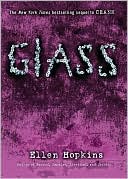
 

Glass by Ellen Hopkins

Margaret K. McElderry Books, 2009 (Reprint edition)

ISBN-13: 978-1416940913

Available: New and Used  ( Bookshop.orgAmazon.com )


Glass is the direct follow up to CrankGlass continues the story of Kristina Snow after she’s had her baby, and kicked meth and nicotine, shortly before her eighteenth birthday. It follows her relapse in her struggle with the meth monster and goes farther than Crank imagined. Sharp and painful,  Glass is hard to read. For one, Kristina seems to not even care that she’s making such horrible mistakes. Almost on autopilot in her quest to fill simple needs, this reader more than once wanted to reach into the lines and try to shake some sense into her.


While Crank goes very far to combat drug use as an introductory tale, Glass is Anti-Drug 201, a hardcore look at more of the nasty side effects of addiction, as good as an uncut marathon of Intervention with viewers thrust, uncomfortably, inside Kristina’s head. There’s no doubt it will be too much for many readers, either too brutal, or too close to home. Hopkins savagely slices through any illusions of “normal life” with beautiful poems and style that makes the story she’s telling all the more horrific. Highly recommended.

Contains: sex, drug use, language, domestic violence


Reviewed by Michele Lee
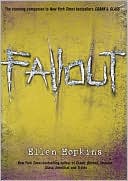
 

Fallout by Ellen Hopkins

Margaret K. McElderry Books, 2010

ISBN-13: 978-1416950097

Available: New and Used  (  Bookshop.orgAmazon.com )


In Fallout, the third book in the series that started with Crank, centered on meth addict Kristina Snow, Hopkins moves on to show the effect Kristina’s selfish ways still have on her children, and covers a wide spectrum of emotional and psychological problems. Fallout is told through three narrators: Hunter, Kristina’s first child, born of rape and trying to deal with rage; Autumn, who struggles with OCD and turns to alcohol to get her through a major life change; and Summer, who is unaware that she has siblings, and has been raised by a series of abusive foster homes and her own addict father.


Fallout is raw, as can be expected from Hopkins, sharp and yet beautiful as well. Hopkins manages to bring new sympathy to the subject, even to characters readers are already familiar with and have started to hate. While the full scope of the story would be missed if readers started the series here, this is the book that will most call to the loved one or friend struggling to support (or justify not supporting) an addict. Highly recommended.

Contains: drug use, sex, language


Reviewed by Michele Lee
Vault Interview: Michele Lee Interviews Ellen Hopkins

Some books never get old. Or at least, the challenges some books face keep coming.

Ellen Hopkins is the author of  several YA novels dealing with frightening issues and situations faced by teens today, Reviewer Michele Lee interviewed her in 2010 as part of Banned Books Week when she was disinvited from the Humble, Texas Teen Lit Festival after a middle school librarian shared concerns with some parents who went to the district superintendent. Although he had never read Hopkins’ books, and other librarians lobbied to keep her as a speaker, he still canceled her appearance. At the time of the interview, Ellen’s titles included Crank , Impulse, Glass, and Fallout.

It’s 2021, and at a school board meeting in Carmel, Indiana members of a “grassroots activist” called Purple for Parents attended a school board meeting where they read from books purportedly in the district’s school libraries supporting LGBTQ+ students and, in addition, explicit passages from, among other books, Crank by Ellen Hopkins. At the meeting a gun fell out of a man’s pocket and he had to be escorted out by police. The administration building has had to install metal detectors, and one of the faces of the group appeared on Fox News to throw the school librarians under the bus. As I watch commenters on Facebook tear down teachers and librarians, break into schools, and dox high school English teachers, I think my head is going to explode.

I will say there are also good people here who believe in our, and our kids’, freedom to read. But we’re not the ones getting national attention.

So I think, as much as things have changed since 2010, they haven’t changed for the better.  It’s time to revisit this interview of Ellen Hopkins.


Michele Lee Interviews Ellen Hopkins

*********************************


ML: While some people joke that they wish their book was banned because it would be great for sales, what actually goes through your mind when someone labels your books inappropriate for their audience?

EH: Either that they haven’t actually read my books (but rather pulled content out of context), or that they have a seriously warped view of the contemporary teen experience. Unfortunately, few enough young adults live healthy, scrubbed lives. And what’ might be deemed “inappropriate” for them is necessary for many others.

ML: What tools have you used to approach a teen audience about such serious topics authentically, but also at a teen level rather than an adult level?

EH: I spend a lot of time talking to teens, both online and through primary outreach. They talk freely to me, so I truly understand many of their issues and concerns. It’s hugely important to walk where they live, rather than assuming what that place is.

ML:  Do you think that teens are different from adults after all, or do we have a skewed idea of the average teen’s worldly knowledge?

EH: Everyone’s story is different. Personal. Many teens are forced to grow up much too quickly, but even those who are allowed an “average” childhood observe peers who have been touched by issues like addiction, depression, abuse, etc. Surely they know these things exist. Why not allow them some sort of perspective?

ML: You mentioned at the forefront of Crank that this book came, more or less, from your real life. Combined with the censorship issue, do you feel that there’s a segment of people who want to just hide all uncomfortable issues from public view?

EH: Of course. Or they just don’t want to look at these things themselves. And what this does is to make them feel somehow superior than, or at the very least apart from, those who are affected by them. Empathy is critical. But ignorance won’t lead you to understanding.

ML: How do you think this affects individuals coping with these issues and how we as a society handle them?

EH: They feel alone in their problems. I can’t tell you how many readers I’ve heard from who really believed that, until they saw themselves between the covers of a book. Mainstreaming them is huge, and they deserve to be considered “just a regular person,” albeit one going through difficult times.

ML: All the individuals in your books have both environmental issues and their own bad decisions to cite for their circumstances. What role does society and the people in supposed support positions play in addiction and depression, among other issues?

EH: Actually, they don’t all have environmental issues. Some do have support, but choose the wrong path anyway. There is a big chunk of choice involved in every bad decision. Learning by example is valid, but when you have the information to know that turning in a certain direction can lead you to a very wrong place, most of the “blame,” if you want to call it that, is on the individual.

ML: As you point out in the upcoming third book in Kristina’s life, Fallout, the damage of addiction is never isolated to just one person. How do we, as individuals, best help those struggling? And is there ever a time when we just have to let go, for our own sa

EH:  There absolutely comes a time when you have to realize there is nothing more you can do to convince someone you love to turn their life around. You simply have to say, “Look. I love you, but I cannot stand by and watch you kill yourself slowly. When you want help I’m here. Until then, goodbye.” That may sound cruel, but self-preservation is paramount to helping someone else. If you’re a wreck, you’re useless to them, anyway. And if they refuse help, despite knowing the likely outcome, they will head down that path anyway.

ML: Likewise, how do we reach to each other as the friends, parents, children or loved ones of addicts? How do we support each other while we’re struggling to support the people struggling with the monster?

EH: First, we refuse to judge them. I can’t tell you how many times I’ve been called a bad mother because of my daughter’s actions. At some point, her choices were completely hers, as they are for everyone. We offer an ear. A shoulder to cry on. Resources, which we can help them find. And mostly, we prop them up when they fold.

ML: Where is the line in addiction (or with those struggling with mental illness) between choices the addict is responsible for, and choices they make as a victim themselves? How do the people on the sidelines resolve issues of forgiveness and personal responsibility in a situation where the person damaging them is also a struggling victim?

EH: Mental illness is much different than choosing a path that can lead to addiction. The former isn’t a choice. The information to make positive decisions is available. Too many people believe they can control their drug of choice. But the drug is almost always in control. Forgiveness is easy. Trust is much more difficult, and should never be given lightly. If an addict truly wants help, it is available, but it is a rocky path. The monster always calls, something people in support positions must always remember. Never give an addict money. Clothe them. Feed them. Make sure their children are safe. But enabling them is the quickest path to watching them fade away completely. This may seem harsh. But I’ve watched my own child relapse, after six years sober. I love her. Always. But I can’t help her die.

ML: This is the question where I usually ask about other releases the author has, or exciting projects they’re working on. While I’d definitely like to hear yours as well, do you think you could also list some great resources (other than your books) for those struggling with these issues?

EH:  Addiction is rarely conquered alone. Many people find the way out through Alcoholics Anonymous (which, for some reason, most addicts find more helpful than Narcotics Anonymous). And for family members, Al Anon will not only help you through, they will offer local resources you might need.

My next young adult book is Perfect (about the drive for the unattainable goal of perfection), due out Fall 2011. And I’m currently writing my first adult novel-in-verse. Triangles (also 2011) is about midlife freakouts.


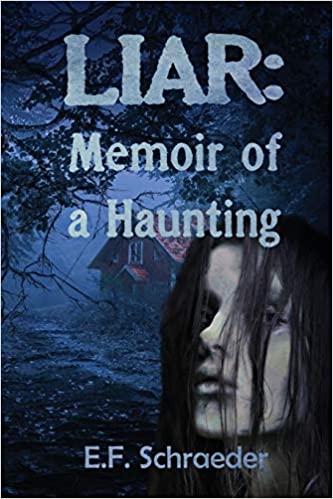
Book Review: Liar: Memoir of a Haunting by E.F. Schraeder

cover art for Liar: Memoir of a Haunting

Liar: Memoir of a Haunting by E.F. Schraeder

Omnium Gatherum, 2021

ISBN-13 ‏ : ‎ 978-1949054347

Available: Paperback, Kindle edition Bookshop.orgAmazon.com )


Alex and Rainey, a lesbian couple ready to escape their home in the hostile Midwest, embark on a long process of visiting Vermont and searching for a house so they can move there. Each house they visit has an ominous feel or dark history… that is, until they visit the Sugar House, a beautiful but isolated property with the primary disadvantage being that it is in a cell phone black hole. Together, they decide to buy the house and move there. Or do they? Told in alternating points of view, piecing together what actually happened is difficult to do. Rainey talks about having misgivings over the house and Alex talking her into it, with the understanding that they’ll live there together. Alex says she never planned to move there and talks about Rainey saying she wanted the peace and quiet of an off-grid life. Rainey finds herself living there alone as Alex travels for work and cares for her mother, who has dementia, in their hometown. It turns out that vacationing in Vermont as a couple is much different than being a lesbian living alone in an insular community and an isolated area, without a reliable way to communicate with the outside world, and gun-toting men frequently knocking on your door to ask if you are home alone and have a working phone. Rainey, who has worked hard to deal with past trauma, finds that it is emerging again. She develops insomnia, becomes obsessed with the trees over the house and local disappearances, and begins to sound more and more paranoid and lost. Despite regular calls, she isn’t getting though to either her therapist or to Alex about how disorienting and disturbing both her exterior and interior lives are becoming.


Alex, tied up with work, travel, and caring for her mother, is discovering the Rainey she knew is changing into someone who is exhausting to talk to and deal with. Alex is becoming frustrated– how terrible can it really be to live in peace and quiet with nature all around you? Her weekends in Vermont are no longer relaxing: they’re taken up with chores. When Rainey suddenly goes quiet and Alex receives a phone call from a neighbor, she rushes to the Sugar House to search for Rainey and finds and reads her journal for clues. On Rainey’s mysterious return, they both acknowledge that there is some kind of presence in the Sugar House.


You would think that these major miscommunications and red flag behaviors would be a death knell for a relationship. Rainey, a humanities professor, gets meta when Alex suggests writing about the experience as a haunted house story, noting that in haunted house stories it’s practically a trope for the story to document the fracturing of a self or of a relationship. Certainly we do see the cracks into Rainey’s sense of self, but while Rainey and Alex’s relationship struggles, the two of them never talk about breaking things off. Rather than discuss what they’re thinking or feeling with each other, they paper it over. People in relationships do this, but it was so frustrating that nothing was resolved.


Schraeder writes with vivid descriptions of the outdoors. I could almost see the snow and hear the aspens shaking. I did feel like the ending got a little confusing, and feel like it could have been fleshed out a little more. Rainey’s thoughts and experiences as she went down the rabbit hole seemed very believable. Liar: Memoir of a Haunting is definitely a different take on the haunted house story.


Reviewed by Kirsten Kowalewski