Home » 2023 (Page 14)

Book Review: The Haunting of Alejandra by V. Castro

The Haunting of Alejandra by V Castro

Del Rey, 2023

ISBN-13:9789583499696

Available:  hardback, ebook, audiobook edition

Bookshop.orgAmazon.com   )


A layered, slow burn horror novel examining domestic and intergenerational trauma.


In The Haunting of Alejandra, V. Castro delivers new mythos and meaning in this irresistible, page-turning horror novel.


Alejandra is a contemporary stay-at-home mom whose depression and despair produce a psychological chill that is sustained throughout. In therapy with a woman who is also a curandera, Alejandra reckons with the frustrations of an unsatisfying marriage and recurring nightmares and visions that plague her, and she soon realizes the horrific images may not solely be in her head. After reconnecting with her mom and exploring her past, Alejandra also discovers the threats she senses are part of a long family history, rooted in a violent past and the story of a deeply misunderstood relative whose life has since become a legend.  In the process of fighting a battle for her children’s safety and her very soul, Alejandra uncovers her hidden past and faces off against a powerful force feeding on a curse that’s linked to her bloodline.


Told in chapters that weave past and present storylines, Castro develops an intriguing journey of healing, while delivering a feverishly intense plot; the emotionally resonant balance of chilling moments and empowering messages results in a satisfying and thrilling read. Highly recommended.


Contains: gore, suicidal ideation, depression, violence


Reviewed by E.F. Schraeder

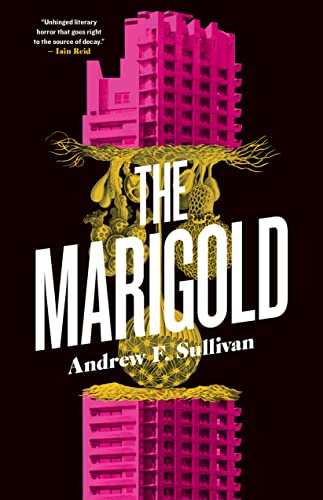
Book Review: The Marigold by Andrew F. Sullivan


The Marigold by Andrew F. Sullivan

ECW Press, 2023

ISBN: 9781770416642

Available: Paperback, Kindle edition 

( Bookshop.org  Amazon.com )


The Marigold is a book readers will probably either love or hate: there won’t be a lot of in-between.  It has a wildly inventive plotline revolving around city decay and revival, but its more literary style of prose may split readers: some will see it as genius, others as overly pretentious writing.  


As noted, the plot is a true original, a nice horror-spiked take on urban blight.  The book asks: what if there is a physical cause?  That’s where the antagonist of the book, a fungus (or is it?) called the Wet, slides in, invading certain buildings in Toronto.  Where the book really shines is playing with the possibilities throughout the book, never giving away too much.  Is the Wet just an annoying mold? Can it infect people?  Could there be intelligence directing it, or is it a sentient being in its own right?  Scary possibilities!  The author does a fantastic job leaving the avenues open, and it all becomes clear at the right time.  He also avoids the usual big reveal at the end, and the story is much better for it.  Tied in to this plot thread is another, the idea of actual sacrifices needing to be made to keep buildings standing upright.  The two threads together make for a very creative knot in terms of story.  Regardless of whether you like the book, one has to admire how well laid out the scenario is.


The book itself moves at somewhat of a “slow burn” pace, gradually picking up some speed, but it’s not a fast page-turner: it works best read in chunks.  The characters push the story where it needs to go. They include a mix of health investigators, unscrupulous land developers, some nosy ordinary citizens, and a conspiracy theorist or two.  All the pieces fit where they should in terms of character development, and there’s enough backstory for the characters to appear believable and generate emotion.


It’s the writing that is a blessing or a curse, depending on how you look at it.  This isn’t straight-ahead Stephen King style writing, it’s more in the vein of T.E. Grau.  The problem is, it doesn’t always work.  The author is capable of reeling off beautifully written passages that would do a literature professor proud, and does it often. However, there are plenty of times where it winds up bogging down the story, instead of driving it.  The main examples are the chapters dealing with how the Wet invades different apartments in the building called the Marigold, and what happens to the tenants.  These chapters could have been trimmed down or slashed altogether. They muddle the pacing, and don’t add to the story.  I started skimming those chapters, since I already knew how the chapters were going to end.  Some of the character dialogue scenes suffered the same problem. They needed less fluff and more stuff.   When it’s good, it’s very good, but the book lacks consistency.  


Bottom line time: The Marigold has a lot of good qualities, but also some glaring deficiencies to overcome.  


Recommended for readers who like what they read above.  It’s not for all, but definitely for some.


Reviewed by Murray Samuelson
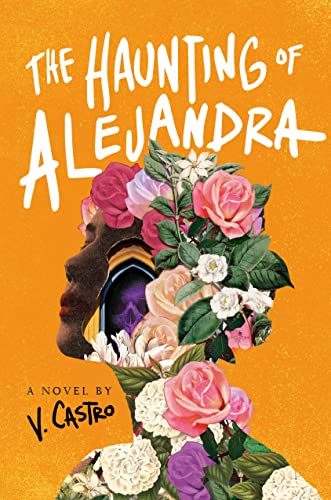
Book Review: The Hacienda by Isabel Canas

Cover art for The Hacienda by Isabel Canas.

The Hacienda by Isabel Cañas

Berkley, 2022

ISBN-13: ‎978-0593436691

Available: Hardcover, paperback, Kindle edition, audiobook. ( Bookshop.orgAmazon.com )


The Hacienda is a gothic horror, haunted house novel set in 1823, two years after the Mexican Revolution, in rural Mexico, told in alternating viewpoints, with gorgeous prose.


Beatriz is the new second wife of a politically connected, wealthy plantation owner. She is alone in the crumbling hacienda, the owners’ house, while her husband remains in the city. Andres is a local boy with occult abilities and hedge witch magic that he has kept hidden, who has recently returned to the area after his ordination as a priest.


When Beatriz can’t get anyone on the estate to believe the house is haunted, she requests an exorcism, which is unsuccessful. Andres and Beatriz believe the spirit haunting the house is her husband’s first wife. It is dangerous enough that Beatriz is only comfortable there in the company of the priest. It’s like a creepy Encanto. Andres begins to believe the only way to release the spirit is for him to let his dark powers out. In the meantime, Beatriz’s husband’s sister decides to speed Beatriz ‘s demise along by setting the house on fire.


The author says she was inspired by du Maurier and Shirley Jackson and you can certainly see that– the beginning has a very Rebecca vibe, and the descriptions of the house and fire definitely were influenced by The Haunting of Hill House and We Have Always Lived in the Castle. The “forbidden romance” is gothic enough, but it didn’t seem relevant. It’s hard to root for a love affair with a priest sworn to celibacy.


Colonialism, racism, colorism, misogyny, patriarchy, and privilege all get attention, not in a didactic way, but through narration of the characters’ daily experiences. Beatriz’s obsession with keeping her skin light, the need for Andres to stay nearby to help with folk beliefs as well as Catholic rituals, the entitlement Beatriz’s husband felt in raping the girls on his estate… these and many other examples show that the possession of the house by a malicious spirit was far from the only horror on the estate.


Reviewed by Kirsten Kowalewski