Home » 2016 (Page 31)

Women in Horror Month: Mary E. Wilkins Freeman and The Wind in the Rose-Bush


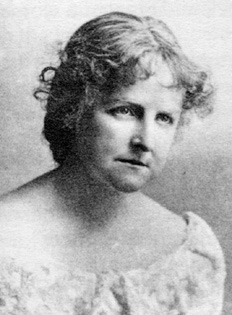
Mary Wilkins Freeman

Mary E. Wilkins Freeman

Mary E. Wilkins Freeman was born on October 31st, 1852 (a great birthdate for a writer of ghost stories) and died March 13, 1930. . She lived during a time when supernatural writing by women flourished, and she was one of the best. She’s been mentioned in the company of Edith Wharton and Henry James, and won the American Academy William Dead Howells Gold Medal. Described primarily as a writer of naturalism, and particularly of regionalism (as were many women writers of the time, including Sarah Orne Jewett) she excelled at creating supernatural tales that took place in the most ordinary of places and situations, in families and small communities where women’s work is never done. Her stories, mostly told through dialogue or by first person narrators, are unsettling because of what isn’t being said. In her story “The Shadow on the Wall”, which takes place in the aftermath of a death in the family, three sisters are desperately trying to block out the creepiness in the room they are working in, and one sister says to another “Don’t speak! I won’t have it!” That’s about as overt as Wilkins-Freeman’s undercurrents of fear and dread ever get. Willful ignorance, dependent behavior, pride, and guilt, especially on the part of women, all appear in Wilkins-Freeman’s stories, and it’s so often what she doesn’t say that really creeps in to stay with you.  In “The Wind in the Rose-Bush”, Rebecca Flint, who has traveled to collect her recently orphaned niece, cannot get a straight answer from anyone about where her niece actually is; in “Luella Miller”, an unreliable  narrator tells us a terrifying story of a woman who literally drains the life out of anyone who helps her.

Wilkins Freeman only wrote about a dozen supernatural stories, and collected six of them into a single volume, The Wind in the Rose-Bush, but it is more than worth your while to seek out her New England ghost stories of haunted women. There’s absolutely no reason not to, since you can read them for free.

For audiobooks of many of her supernatural stories, click here

To download a free ebook of  The Wind in the Rose-Bush, her collection of supernatural stories. click here

If you want all of her work collected together, Amazon sells The Collected Supernatural and Weird Fiction of Mary E. Wilkins Freeman, which includes her novelettes.

For much more detail on her life, click here or seek out Brian Stableford’s entry on her in the St. James Guide to Horror, Ghost, and Gothic Writers at the reference desk of your local library.


Book List: Breaking Cliches in Zombie Fiction

I was reading a blog post on realism in zombie fiction by Brian Parker, a writer of zombie fiction. Somewhere in the middle of it, he addressed the problem of the Mary Sue in zombie novels:

If you’re like me, you likely roll your eyes at the stereotypical protagonist in zombie fiction. You know the type, it’s some guy or girl—devastatingly handsome or beautiful, but overlooked by the rest of society—who works at a video game store. When the shit hits the fan, they come out of their shell and use their secret level-84 ninja skills to become the unlikely leader who saves their friends and/or family. Everyone in the group is an expert shot and every time they pull the trigger, heads explode. Sound familiar? More on that in a moment. Don’t forget the quintessential part of a typical zombie novel: The main character’s love interest is unattainable before the zombies appear, but once their competition is killed, the guy gets the girl and everyone lives happily ever after.

Luckily for us, there are zombie stories out there that successfully break, or at least subvert, these character and plot cliches.  Here are a few worth checking out.
 The List  by Michele Lee

This is a brief novella that can be read in one sitting, and you’ll want to do that. The story is told in first person by an unsympathetic protagonist with poor social skills who has a lot of built up resentments against the other residents of his apartment building. At the time of the story, he’s been holed up safely for quite some time, and has successfully avoided getting infected by the zombie virus. He is about to emerge and work his way through the building by taking out the now-zombified residents of the building, one at a time, in brutal and gory fashion. Despite the unsympathetic narrator, the voice is fantastic, and there is plenty of dark humor. In the interests of full disclosure, Michele is a reviewer for Monster Librarian and the editor for our companion blog Reading Bites, but that doesn’t affect my recommendation here.

 Allison Hewitt Is Trapped by Madeleine Roux

We’ve previously reviewed Allison Hewitt Is Trapped. I’m not going to claim realism here, but I also wouldn’t call Allison a Mary Sue. She’s a graduate student who works in a bookstore (no video games here– each chapter is named for a book) and is trapped in the break room with the rest of the bookstore staff and a couple of customers, with no apparent rescue in sight,  blogging about the experience on a miraculously still-existing military Internet network. I find Allison’s ability to wield a fire ax as a deadly weapon, without prior experience, to be unrealistic, but even since its publication in 2011, there aren’t enough books in this subgenre with women who are snarky, resourceful, save themselves, and can strangle their enemy with a laptop cord. The story doesn’t end exactly unhappily for her, but there’s a companion book that takes place many years later, and the zombies still are ravaging pretty much everything, so I wouldn’t say it’s a happy ending either.


 Ashes by Ilsa J. Bick

Never be afraid to check out YA fiction– there are some powerful works out there. Ashes is one of these. The main character and narrator is Alex, a teenage girl with terminal brain cancer and considerable camping, hiking, and general survival skills, who decides to run away to the forests of Michigan to spend her last days. While she’s there, an electromagnetic impulse hits, kills millions of people, destroys communications and technology, and turns the majority of children and teenagers into flesh-eating zombies. She is joined by Ellie, a spoiled and obnoxious nine year old who is orphaned early on, and Tom, a soldier she encounters in the forest. Oh my gosh, this is a dark, brutal, and desperate read. Anyone who thinks YA is light and fluffy can think again. I also think it’s a very realistic portrayal. Alex doesn’t suddenly discover she has super survival skills– her skills are a big part of the reason she escapes the EMP in the first place. Tom doesn’t mystically discover he has weapons skills– he’s a trained soldier. And nothing is more realistic than an obnoxious nine year old. This is the first book in a trilogy, and I really recommend it.

Book Review: Greylock by Paula Cappa


Greylock by Paula Cappa

Amazon Digital Services

ASIN: B0168XVNZS

Available: Kindle edition

Alexei Georg is in an uncomfortable situation: the brilliant and difficult sonata he has claimed as his original work was composed by someone else, name unknown. The sonata, titled October, has won him awards and may now qualify him for a grant to travel to the White Sea in Russia to record the songs of beluga whales so he can write a symphony based on their sounds , which he will be given time to write in the isolated wildlife refuge of Mount Greylock. Standing in the way of his goal are a lack of confidence that reveals itself in mediocre public performances of any other piece of music, and his vindictive wife, Carole Anne, who threatens to reveal the secret to the awards committee when he leaves her. An affair, a conspiracy with his mentor to prevent Carole Anne from revealing his secret, a jealous cousin, and a serial killer on the loose, all complicate events as Alexei attempts to escape to Russia to hear the belugas. All this would be more than enough to stand alone as a mystery, and Cappa writes that she was influenced heavily by Philip Marlowe, but the real story is the story of the music, and what Alexei is willing to sacrifice in order to rise to musical fame. The trope of a deal with dark forces for fame and glory, particularly in the musical world, is fairly common, but Cappa transforms it. Her vivid descriptions overtake the imagination, and at times, especially in her depictions of nature, have an actual physical impact on the reader. Cappa’s setting of a small boat in the White Sea was original and well executed, with plenty of shivers, bringing the supernatural to the forefront, and her prose in describing the beluga whales and the ocean voyage flowed beautifully.

Cappa’s descriptive powers aren’t limited to nature, either. It is really difficult to write a good sex scene without cliches or purple prose, but Cappa completely avoids these traps in writing about Alexei and his love interest, Lia.  Both of them have agency and show respect to each other, and Cappa writes their casual relationship respectfully as well. It’s great to see this kind of depiction of a modern affair written so skillfully. The story is frustrating on some levels, though. First, none of the characters are particularly likable or sympathetic. Mostly, they are self-centered and manipulative. While Alexei and his love interest, Lia, are well developed, Carole Anne is a caricature, and the police detective on the case of the serial killer is seen only perfunctorily, through the eyes of Alexei and his cousin, who view her with contempt. It’s also difficult to understand the motivations of many of the characters. For instance, Lia, who has known Alexei only casually in the past, chooses to stick with him after she’s threatened at work by Carole Anne, and decides to drive hours to visit him at the isolated Mount Greylock after multiple warnings that he is the primary suspect in the serial killer murders. Finally, I feel that the two storylines, of the more prosaic serial killer murders and the Gothic “deal with dark forces”, could both be stronger as stand alone stories. In particular, the supernatural story left a lot of questions hanging.

Despite any of the issues I had with Greylock, its descriptive powers, insight into both the power of music and the power of nature, and Cappa’s original treatment of what can be a fairly tired theme, aren’t noticeable once the reader is into the flow of the story, and it is well worth the time of any reader who wants to be swept away into an atmosphere where nature, humanity, and the supernatural combine to create both sublime terror and beauty. Recommended.